
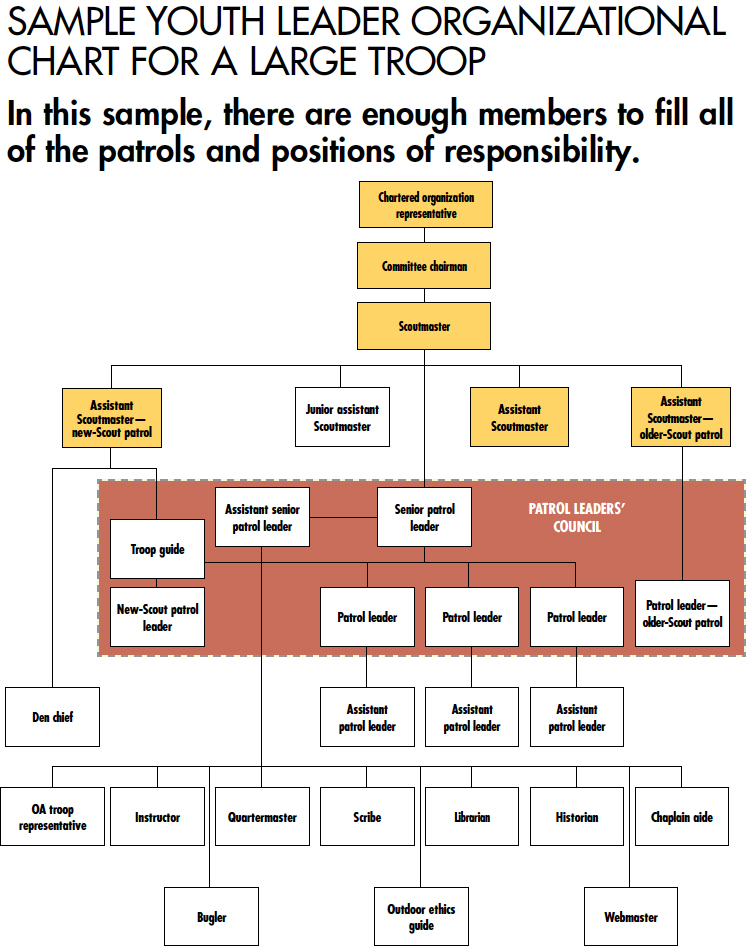
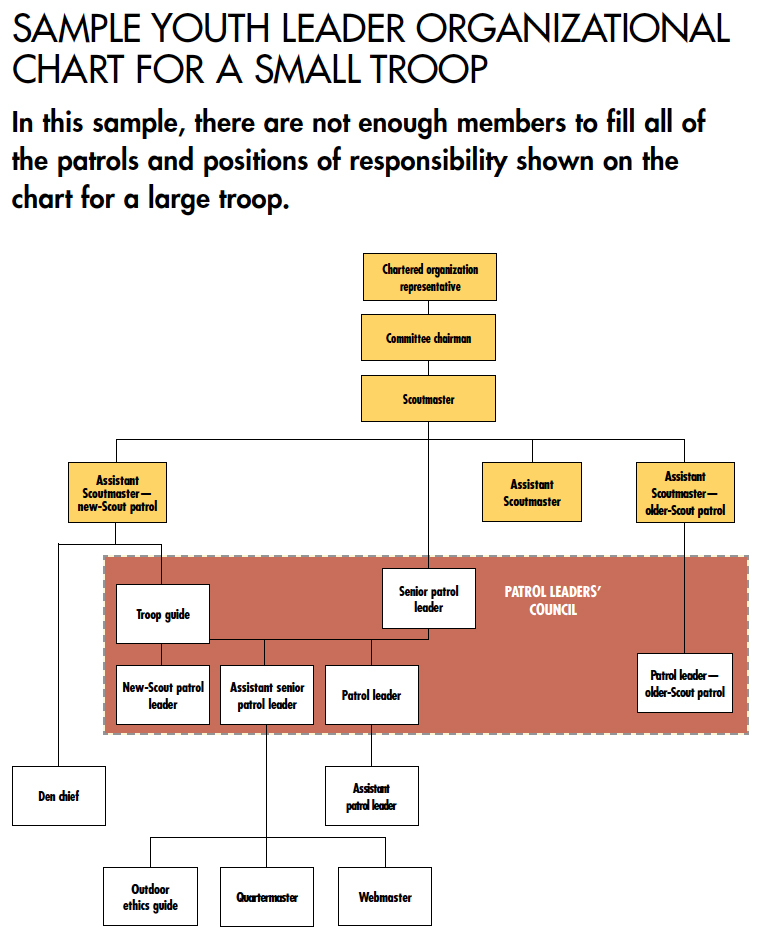
Senior Patrol Leader
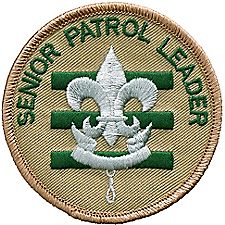 With three green bars behind the Scout emblem, the senior patrol leader’s shoulder patch symbolizes one of the oldest leadership positions in Scouting. Scouting America has long recognized the senior patrol leader as the highest youth leadership position in a troop. They are the primary link between a troop’s Scouts and its adult leaders. They shoulder the responsibility for leading meetings of the troop and the patrol leaders’ council and provide valuable leadership in planning and carrying out the troop’s program of outdoor activities, service projects, and events.
Responsibilities
- runs all troop meetings, events, activities, and the annual program planning conference
- runs the patrol leaders’ council (PLC) meetings
- appoints other troop youth leaders with the advice and counsel of the Scoutmaster
- assigns duties and responsibilities to youth leaders
- assists the Scoutmaster with youth leader training
- sets a good example
- wears the Scout uniform correctly
- lives by the Scout Oath and Law
- shows Scout spirit
Refer to Scouting America Publication Senior Patrol Leader Handbook
Assistant Senior Patrol Leader
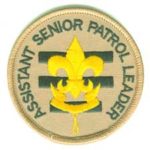 The assistant senior patrol leader is the second highest youth leadership position in the troop, working closely with the senior patrol leader to help the troop move forward. The assistant senior patrol leader acts as the senior patrol leader in the absence of the senior patrol leader or when called upon, and provides leadership to other youth leaders in the troop. The assistant senior patrol leader is appointed by the senior patrol leader under the guidance of the Scoutmaster.
Responsibilities
- helps the senior patrol leader lead meetings and activities
- runs the troop in the absence of the senior patrol leader
- helps train and supervise the troop scribe, quartermaster, instructor, librarian, historian, webmaster, chaplain aide, and OA representative
- serves as a member of the patrol leaders’ council
- sets a good example
- wears the Scout uniform correctly
- lives by the Scout Oath and Law
- shows Scout spirit
- lends a hand controlling the patrols and building patrol spirit
Patrol Leader
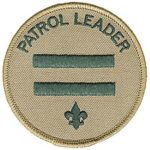 The patrol leader is the patrol’s key leader, representing the patrol at all patrol leaders’ council meetings and the annual program planning conference, and keeping patrol members informed of decisions made. Patrol leaders carry out planning, leading, and evaluating patrol meetings and activities, and assure patrols are prepared to participate in all troop activities. They keep their patrol intact so they can work together and share responsibilities to get things done. It is incumbent upon them to be a good example for the members of their patrol and the rest of the troop.
Responsibilities
- plans and leads patrol meetings and activities
- keeps patrol members informed
- assigns each patrol member a specific duty
- represents his patrol at all patrol leaders’ council meetings and the annual program planning conference
- prepares the patrol to participate in all troop activities
- works with other troop leaders to make the troop run well
- knows the abilities of each patrol member
- sets a good example
- wears the Scout uniform correctly
- lives by the Scout Oath and Law
- shows and develops patrol spirit
Refer to Scouting America Publication The Patrol Leader Handbook
Troop Guide
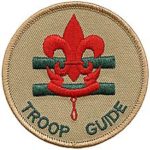 Troop guides serve as both a leader and a mentor to the members of the new-Scout patrol. They should be an older Scout who holds at least the First Class rank and can work well with younger Scouts.
The troop guide helps the patrol leader of the new-Scout patrol lead their patrol, so they can develop into a well-functioning group, working together harmoniously and productively.
Responsibilities
- introduces new Scouts to troop operations
- helps new Scouts towards earning the First Class rank
- teaches basic Scout skills
- coaches the patrol leader of the new-Scout patrol on their duties
- works with the patrol leader at patrol leaders’ council meetings
- attends patrol leaders’ council meetings with the patrol leader of the new-Scout patrol
- counsels individuals Scouts on Scouting challenges
- sets a good example
- wears the Scout uniform correctly
- lives by the Scout Oath and Law
- shows Scout spirit
Quartermaster
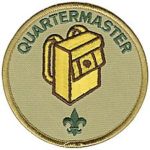 Quartermasters serve as the troop’s supply boss. They keep an inventory of troop equipment and see that the gear is in good condition. They work with patrol quartermasters as they check out equipment and return it. At meetings of the patrol leaders’ council they report on the status of equipment in need of replacement or repair. In carrying out their responsibilities, they may have the guidance of a member of the troop committee.
Responsibilities
- keeps records on patrol and troop equipment
- makes sure equipment is in good working condition
- issues equipment and makes sure it is returned in good condition
- makes suggestions for new or replacement items
- works with the troop committee member responsible for equipment
- sets a good example
- wears the Scout uniform correctly
- lives by the Scout Oath and Law
- shows Scout spirit
Scribe
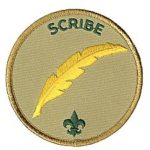 The scribe is the troop’s secretary. Though not a voting member, they attend meetings of the patrol leaders’ council and keep a record of the discussions. They cooperate with the patrol scribes to record attendance at troop meetings and to maintain troop advancement records. The troop scribe may be assisted by a member of the troop committee.
Responsibilities
- attends and keeps a log of patrol leaders’ council meetings
- records individual Scout attendance
- records individual Scout advancement progress
- works with the troop committee member responsible for records and finance
- sets a good example
- wears the Scout uniform correctly
- lives by the Scout Oath and Law
- shows Scout spirit
Den Chief
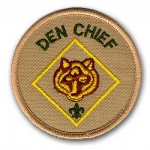 Den chiefs are Scouts who assist a Cub Scout den leader or Webelos den leader. They are selected by the senior patrol leader and Scoutmaster, and approved by the cubmaster and the pack committee for recommendation to the den leader. Den chiefs help Cub Scouts advance through Cub Scout ranks and encourage Cub Scouts to join a troop upon graduation.
Responsibilities
- Be reliable, such as being at the den and pack meetings early
- Take Den Chief Training online or conducted by your district or council
- Take the Den Chief Pledge
- Maintain patience and a positive attitude
- Understand the needs of Cub Scouts in the den, such as being sensitive to the needs of all members of your den based on their characteristics
- Provide encouragement to the scout in your den
- Give instruction to youth who require special attention
- Understand the Methods of Cub Scouting: Living the ideals, Belonging to a den, Advancement, Family Involvement, Activities, Serving the Neighborhood, and Uniform
- Help the den leader with den meetings.
- Help lead activities, games, and ceremonies.
- Help the members learn to be leaders.
- Reflect the principles of the Scout Oath and Scout Law.
- Set a good example as a role model.
- Share knowledge of the outdoors.
- Encourage Cub Scouts and Arrow of Light Scouts to move on to the next Scouting level.
- Support the Denner/Assistant Denner
More Resources:
- BSA Publication Den Chief Handbook
- Den Chief Training
- Den Chief Service Award
Chaplain Aide
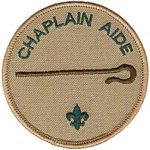 Chaplain aides assist the troop chaplain (usually an adult from the troop committee or the chartered organization) in serving the religious needs of the troop. They lead the troop in opening or closing prayer and mealtime blessings. Chaplain aides ensure that religious holidays are considered during the troop’s program planning process and promotes the Scouting America’s religious emblems program.
Responsibilities
- assists the troop chaplain with religious services at troop activities
- encourages troop members to strengthen their own relationships with God through personal prayer and devotion and participation in religious activities appropriate to their faith
- tells Scouts about the Religious Emblems program for their faith at least once a year
- helps recognize troop members who receive their religious emblems, (such as at a court of honor)
- makes sure religious holidays are considered during the troop program planning process
- helps plan for religious observance in troop activities
- encourages saying grace at meals while camping or at other activities
- helps promote annual Scout Sunday or Scout Sabbath
- sets a good example
- wears the Scout uniform correctly
- lives by the Scout Oath and Law
- shows Scout spirit
Historian
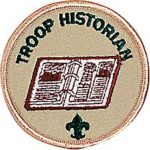 The historian collects, assembles, and preserves troop photographs, news stories, trophies, flags, scrapbooks, awards, and other memorabilia, and makes materials available for Scouting activities, courts of honor, the media, and troop history projects.
Responsibilities
- gathers photos and facts about troop activities and keeps them in a historical file or scrapbook
- takes care of troop trophies, ribbons, and souvenirs of troop activities
- keeps information about former members of the troop
- sets a good example
- wears the Scout uniform correctly
- lives by the Scout Oath and Law
- shows Scout spirit
Instructor
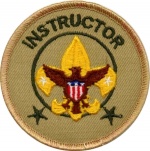 Each instructor is an older troop member proficient in a Scouting skill who must also have the ability to teach that skill to others. An instructor typically teaches subjects that Scouts are eager to learn—especially those such as first aid, camping, and backpacking—that are required for outdoor activities and rank advancement. A troop can have more than one instructor.
Responsibilities
- teaches basic Scouting skills
- schedule/coordinate merit badge counselor(s) for troop/Scout instruction
- sets a good example
- wears the Scout uniform correctly
- lives by the Scout Oath and Law
- shows Scout spirit
Librarian
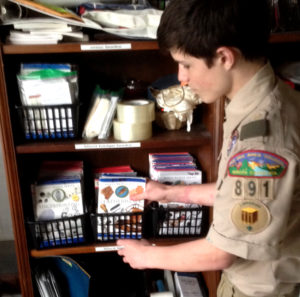 Troop librarians oversee the care and use of troop books, pamphlets, magazines, audiovisuals, and merit badge counselor lists. They check out these materials to Scouts and leaders and maintain records to ensure that everything is returned. They may also suggest the acquisition of new literature and report the need to repair or replace any current holdings. Responsibilities
- sets up and takes care of the troop library
- keeps records of books and pamphlets owned by the troop, may work with webmaster to manage the troop’s digital library
- adds new or replacement items as needed
- keeps books and pamphlets available for borrowing
- keeps a system for checking books and pamphlets in and out, and follows up on late returns
- sets a good example
- wears the Scout uniform correctly
- lives by the Scout Oath and Law
- shows Scout spirit
Webmaster
 Troop webmasters are responsible for maintaining the troop’s website. They make sure that information posted on the website is correct and up to date and that the privacy of youth and adult troop members is protected. A member of the troop committee may assist them with their work.
Responsibilities
- works with various unit members on needed topics
- ensures the website is as youth-run as possible
- maintains the website as needed
- sets a good example
- correctly wears the Scout uniform correctly
- shows Scout spirit
Bugler

The bugler plays the bugle (or similar instrument) to mark key moments during the troop meeting, such as assembly, or on troop outings, such as reveille, mess call, and lights out. The bugler must know the required bugle calls and ideally should have earned the Bugling merit badge or be working toward earning it.
Responsibilities
- makes appropriate bugle calls, as requested, at troop meetings and activities
- sets a good example
- wears the Scout uniform correctly
- lives by the Scout Oath and Law
- shows Scout spirit
OA Representative
 Order of the Arrow representatives serve as a communication link between the troop and the local Order of the Arrow lodge. By enhancing the image of the Order as a service arm to the troop, they promote the OA, encourage Scouts to take part in all sorts of camping opportunities, and helps pave the way for older Scouts to become involved in high-adventure programs.
Responsibilities
- attends troop, chapter and lodge meetings regularly as a youth representative of the troop and Order
- serves as a two-way communication link between the troop and the lodge or chapter
- arranges with the lodge or chapter election team to conduct an annual Order of the Arrow election for the troop at a time approved by the patrol leaders council
- arranges with the lodge or chapter for at least one camp promotion visit to the unit annually
- makes at least one high adventure presentation to the troop, to include the OA programs, annually
- participates in troop courts of honor, as requested by the senior patrol leader, by recognizing: high adventure participation of troop members, induction of new OA members, changes in OA honors of troop members, and other appropriate activities
- coordinates the ordeal induction process for newly elected candidates by: ensuring they know the time and location of the ordeal, providing information of what to bring to the ordeal, assisting (as needed) in arranging transportation to the ordeal, and offering assistance (as needed) to the lodge in the ordeal process
- assists current ordeal members in the troop in sealing their membership by becoming brotherhood members by: ensuring they know the time and location of brotherhood opportunities, assisting (as needed) in arranging transportation to the brotherhood opportunities, and offering assistance to the lodge (as needed) in the brotherhood process
- offers periodic training and discussions of OA principles, symbolism, and the Legend as needed by and appropriate for the troop members of the Order, at the discretion of the PLC
- assists the troop (as appropriate) as a trainer of leadership and outdoor skills.
- advocates environmental stewardship and Leave No Trace camping
- sets a good example by: wearing the Scout uniform correctly, showing Scout spirit, and living by the Scout Oath, the Scout law, and the OA Obligation
Outdoor Ethics Guide
 Outdoor ethics guides help troops plan and conduct an outdoor program that emphasizes effectively practicing the Outdoor Code, the Leave No Trace principles, and the Tread Lightly! principles. Guides work to help Scouts improve their outdoor ethics decision-making skills to help minimize impacts as they hike, camp, and participate in other outdoor activities. In particular, they should support Scouts who are working to complete the relevant requirements for the Tenderfoot, Second Class, and First Class ranks.
Responsibilities
- assures the troop adheres to the Principles of Leave No Trace, Tread Lightly, and the Outdoor Code
- sets a good example
- wears the Scout uniform correctly
- lives by the Scout Oath and Law
- shows Scout spirit
Junior Assistant Scoutmaster
 Junior Assistant Scoutmasters are 16- to 17-year-old Scouts appointed by the Scoutmaster, approved by the troop committee, and responsible to the Scoutmaster for tasks assigned. The junior assistant Scoutmaster functions just like an assistant Scoutmaster (except for leadership responsibilities reserved for adults 18 years of age or older). In this capacity, junior assistant Scoutmasters (a troop may have more than one) follow the guidance of the Scoutmaster in providing support and supervision to other youth leaders in the troop. Upon their 18th birthday, a junior assistant Scoutmaster will be eligible to become an assistant Scoutmaster
Responsibilities
- performs duties as assigned by the Scoutmaster.
- sets a good example.
- wears the Scout uniform correctly
- lives by the Scout Oath and Law.
- shows Scout spirit
Scoutmaster
 The Scoutmaster is the adult responsible for working directly with the Scouts providing direction, coaching, and support.
The Scoutmaster has three basic roles:
- providing the youth leaders with the tools and skills so they can run the troop
- making sure the rules of Scouting America and chartered partner are followed
- being a good mentor and positive role model
- Every youth deserves a trained leader. See more about training opportunities for adults including Scoutmasters at https://www.scouting.org/training/
- BSA Publication Troop Leader Guidebook
Assistant Scoutmaster
 An assistant Scoutmaster is an adult leader over the age of 18 who helps the Scoutmaster deliver the promise of Scouting. Each assistant Scoutmaster is assigned specific program duties. They can serve the troop by guiding a particular patrol to which they’ve been assigned, advising certain Scouts who’ve assumed a position e.g. the quartermaster or OA representative, or fill in as necessary to assure the junior leaders have what they need to run things. For more information about Adult roles in Scouting, see https://www.scouting.org/training/.
Committee Chair
 The troop committee chair is appointed by the chartered organization to see that all committee functions are carried out. The troop committee chair appoints and supervises the unit committee and unit leaders, and organizes the committee to see that all committee responsibilities are delegated, coordinated and completed. Duties (from the Troop Committee Guidebook):
- Organize the committee to see that all functions are delegated, coordinated, and completed.
- Maintain a close relationship with the chartered organization representative and the Scoutmaster.
- Interpret national and local policies to the troop.
- Prepare troop committee meeting agendas.
- Call, preside over, and promote attendance at monthly troop committee meetings and any special meetings that may be called.
- Ensure troop representation at roundtables.
- Secure top-notch, trained individuals for camp leadership.
- Arrange for charter review and recharter annually.
- Plan the charter presentation
Committee Members
 The troop committee is a cross between a board of directors and a parent support group. It sets troop policies and handles administrative functions, allowing the Scoutmaster and assistant Scoutmasters to focus on working directly with the Scouts.
A robust troop committee supports an effective scouting program. The below is a list of common and desirable roles for adults within the troop committee. Secretary Duties:
- Keep minutes of meeting and send out committee meeting notices.
- Handle publicity.
- Prepare a family newsletter of troop events and activities.
- Conduct troop resource survey.
- Plan for family night programs and family activities.
- At each meeting, report the minutes of the previous meeting.
Treasurer Duties:
- Handle all troop funds. Pay bills on recommendation of the Scoutmaster and authorization of the troop committee.
- Maintain checking and/or savings accounts.
- Train and supervise the troop scribe in record keeping.
- Keep adequate records.
- Supervise money-earning projects, including obtaining proper authorizations.
- Supervise the camp savings plan.
- Lead in the preparation of the annual troop budget.
- Lead the Friends of Scouting campaign.
- Report to the troop committee at each meeting.
Outdoor Activities Coordinator Duties:
- Help in securing permission to use camping sites.
- Serve as transportation coordinator.
- Ensure a monthly outdoor program.
- Promote the National Camping Award.
- Promote, through family meetings, attendance at troop campouts, camporees, and summer camp to reach the goal of an outing per month.
- Report to the troop committee at each meeting.
Advancement Coordinator Duties:
- Encourage Scouts to advance in rank.
- Work with the troop scribe to maintain all Scout advancement records.
- Arrange quarterly troop boards of review and courts of honor.
- Recruit merit badge counselors.
- Make a prompt report of advancements using online tools or appropriate paper forms to the council service center. Secure badges and certificates.
- Work with the troop librarian to build and maintain a troop library of merit badge pamphlets and other advancement literature.
- Report to the troop committee at each meeting.
Chaplain Duties:
- Provide a spiritual tone for troop meetings and activities.
- Give guidance to the chaplain aide.
- Promote regular participation of each member in the activities of the religious organization of their choice.
- Encourage Scouts to earn their appropriate religious emblems.
- Report to the troop committee at each meeting.
Training Coordinator Duties:
- Ensure troop leaders and committee members have opportunities for training.
- Maintain an inventory of up-to-date training materials and resources.
- Be responsible for Youth Protection Training compliance within the troop.
- Encourage periodic youth leadership training within the troop and at the council and national levels.
- Report to the troop committee at each meeting.
- Assist in orientation to new parents.
- Be watchful that the troop is taking all steps to ensure youth safety.
Equipment COordinator Duties:
- Supervise and help the troop procure camping equipment.
- Work with the quartermaster on inventory and proper storage and maintenance of all troop equipment.
- Make periodic safety checks on all troop camping gear, and encourage the troop in the safe use of all outdoor equipment.
- Report to the troop committee at each meeting.
Membership Coordinator Duties:
- Develop a plan for year-round membership flow into the troop.
- Work closely with the Cubmaster and Webelos/AOL den leaders of neighboring Cub Scout packs to provide a smooth transition from pack to troop. Assist in developing and recruiting den chiefs, and assist in the crossover ceremony.
- Plan and coordinate troop open houses to invite non-Scouts into the troop.
- Encourage Scouts to invite their friends to the troop.
- Keep track of Scouts who drop out of the troop, and develop a plan to encourage them to region.
- Report to the troop committee at each meeting.
This is not an exhaustive list of positions a troop may need. Troops are encouraged to engage all parents in a role that suits their skills and interests.
The essential support literature for troop committee members is the Scouting America publication Scouts BSA Troop Committee Guidebook. 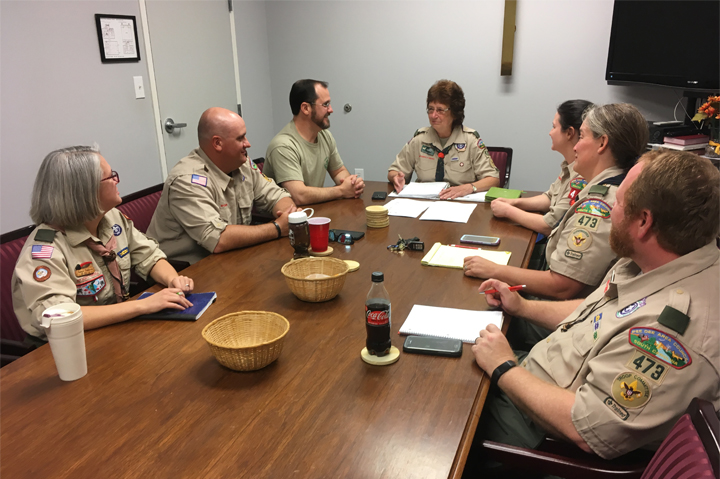
Charter Organization Representative
 The Chartered Organization Representative (COR) is the direct contact between the unit and the Chartered Organization. This individual is also the organization’s contact with the District Committee and the Local Council. The chartered organization representative may become a member of the district committee and is a voting member of the council. If the chartered organization has more than one unit, one representative serves them all. The Chartered Organization Representative appoints the Unit Committee Chairman.